Tuesday, August 6, 2013

The Truth About Urine

Urine isn't something most people talk about. We barely give it more than a passing glance as it swirls out of sight down the toilet bowl. Yet changes in the urine -- its color, odor, and consistency -- can provide important clues about the status of your body. Your urine can reveal what you've been eating, how much you've been drinking, and what diseases you have.
"Urine and urinalysis have, for hundreds of years, been one of the ways physicians have looked at health," says Tomas Griebling, MD, MPH, vice chair of the urology department at the University of Kansas.

Recommended Related to Urinary Incontinence/OAB

Bladder suspension refers to surgery that helps place a sagging bladder back into its normal position. Is this type of surgery right for you? Here are answers to some of the most common questions, from who may need this procedure to possible complications. 
"From a historical view, urinalysis was one of the original windows into what's happening in the body," Griebling says. That's because many of the substances circulating in your body, including bacteria, yeast, excess proteinand sugar, eventually make their way into the urine.
Urine is an important part of the body's disposal process. Its job is to remove the extra water and water-soluble wastes the kidneysfilter from the blood. "The urine is there primarily to get rid of toxins or things that would otherwise build up in the body that would be bad for the body," says Anthony Smith, MD, professor and chief of urology at the University of New Mexico.
When you notice that your urine has changed color, or there's a strange odor wafting up from the toilet, the cause might be something as harmless as what you had for dinner (which could have included beets or asparagus). It also might be a sign of a more serious condition, such as an infection or cancer.
Before you flush, here are a few urine changes to look out for, and what they might be saying about your health.

Color Changes

Urine gets its yellow color from a pigment called urochrome. That color normally varies from pale yellow to deep amber, depending on the concentration of the urine. Darker urine is usually a sign that you're not drinking enough fluid. "Your body needs a certain amount of fluid to function, so the body will hold on to fluid and the urine will become very strong and concentrated. When that happens, it will turn a darker color," Griebling says.  
The opposite is also true. If your urine is very pale, it means that you're either drinking a lot of fluid, or you're taking a diuretic -- a drug that forces the body to get rid of excess water.
Urine can turn a rainbow of colors, and an unusual hue isn't necessarily cause for alarm. Certain medications can turn the urine fluorescent green or blue, carrots can tint it orange, vitamins can give it a yellow hue, and an inherited disease calledporphyria can shade it the color of port wine.
Seeing red is typically a sign that there is blood in the urine, but before you panic, know that a little blood can produce a dramatic color change. "What I always tell patients is it takes one drop of blood to turn a toilet bowl red," Smith says.
That said, just a little blood in the urine can be a sign of something serious, like an infection or cancer, and it warrants a visit to your doctor or urologist. If you're seeing blood and your urine is also cloudy, there's a good chance you've picked up an infection, Smith says.

Monday, August 5, 2013

Liver Pain Symptoms

The liver is responsible for many functions of the body. Having an ailing liver means these processes are not effective, and this can lead to further complications. In some cases, liver ailments are fatal. Many liver diseases and other organ conditions can lead to liver pain. Knowing the causes and treatment options will help you better cope with liver pain.
liver-pain-symptoms.jpg

Liver Pain Symptoms

Being one of the most essential organs in the digestion process, the liver is responsible for breaking down foods into energy as well as getting rid of poisons from the blood.
Liver diseases are a collection of disorders, conditions as well as infections. These affect cells, tissues and structures of the liver, which leads to liver damage and even stops the functioning of the liver.
The number of deaths from liver diseases is on the rise in the United States and other parts of the world. These diseases cause liver pain with the symptoms varying depending on the condition.

Liver pain location and symptoms

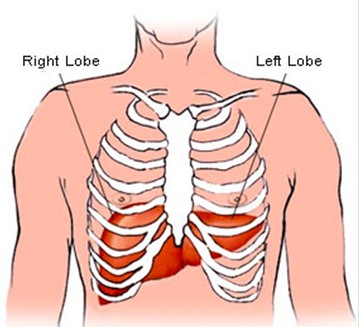
Liver pain is often confused with kidney pain, abdominal pain, or back pain because of its location. Liver pain is felt in the upper-right quadrant beneath your rib cage. It is usually felt as an ache that is dull, or the pains can be sharp and can sometimes be accompanied by back/shoulder pain.

When to see a doctor

It is important to book an appointment with your doctor in case you experience persistent symptoms and pain, or if you experience symptoms in hepatitis, such as hallucinations, confusion, memory problems, fainting, extreme fatigue, vomiting blood and fever.
Seek medical care immediately if you experience pain in shoulder or in upper right abdomen, along with difficulty breathing, an eating disorder, fatigue, pain with breathing, itchy skin, or pain with coughing.

Causes of Liver Pain

1. Acetaminophen toxicity

When the body is induced with excess acetaminophen it can lead to liver damage. Acetaminophen is a substance contained in a wide range of medications like headache capsules, allergy capsules as well as sinus capsules.
Besides, liver pain, signs include dark urine, itchy skin, whitening of the eyes, skin yellowing, flu like symptoms and abdominal tenderness on the upper right side.

2. Alcoholic liver disease

This is also referred to as liver cirrhosis. This develops over years of excessive intake of alcohol. Signs include confusion, abdominal tenderness and pain, fatigue, excessive thirst, jaundice, fever, nausea, loss of appetite and weight gain. Other symptoms include agitation, dark black or bloody bowel movement, and development of breasts in males, paleness, concentration difficulties, hallucinations and sluggish movement among many others.
Treatment involves discontinuing the use of alcohol, joining self help groups to get help for dependency on alcohol. Taking abstinence medication is also advisable to help keep away from alcohol. Nutrition therapy is also advised. Foods rich in calories, carbohydrates, and proteins are essential. Vitamin supplements are also prescribed.
As a last result, liver transplant is advised. This happens when the liver completely ceases to function and medication is no longer dependable.

3. Primary liver cancer

This condition is caused when liver cells grow abnormally. This liver problem is only detectable after it has reached advanced stages. One can avoid developing this type of liver condition by preventing liver cirrhosis, as well as hepatitis.
Symptoms include enlargement of the liver (which causes liver pain), appetite loss, weight loss, weakness and fatigue, nausea and vomiting, upper right abdominal pain and skin discoloration and white eyes.
Treatments include chemotherapy, radiofrequency ablation, and pure alcohol injection to tumors, liver transplant, cryotherapy or cryosurgery and radiation therapy.

4. Liver cirrhosis

This is the dreaded alcoholic liver disease. Symptoms include abdominal pain, exhaustion, easy bruising, gallstones, cola-colored urine, bleeding in the intestines and esophagus, itchy feet and hands, type 2 diabetes and insulin resistance, nausea, liver cancer, medication sensitivity and liver failure among other signs.
Treatment involves managing the symptoms and complications. The cause can also be treated to stop further ailing. Reducing smoking and drinking is also advised. The only cure is getting a liver transplant.

5. Liver cysts

This is a thin walled bubble that is filled with fluid. This condition poses no health risks. If they grow without detection, they cause discomfort and pain in the abdomen's right upper side, infection of the bile duct and enlargement of the liver.
Treatment includes use of nutritional medication to reduce the cysts and in some cases the cysts need to be removed.

6. The fatty liver disease

Having some fat in the liver is considered normal. However, if it exceeds 10%, you may develop the fatty liver disease. The disease is usually hereditary. It is also common in people who are overweight. Victims usually have diabetes, pre-diabetes, high cholesterol and triglycerides. Other causes include
  • Medications
  • Inherited or autoimmune liver disease
  • Malnutrition
  • Rapid weight loss
  • Viral hepatitis
Signs include fatigue, liver failure, loss of appetite, nausea, weight loss, weakness, jaundice, cola colored urine and fluid in the abdominal cavity among others.
Treatment involves eating balanced meals, increasing physical activity and exercising. Staying away from unnecessary medication also speeds up the healing process. In severe cases, liver transplant may be recommended.

7. Liver fibrosis

This is the last stage of alcohol liver disease. It is characterized by fibroids formation and the formation of fibrous tissues, liver scaring and regenerative nodules. Consequently, blood circulation is impeded leading to progressive liver disease.
Signs include exhaustion, abdominal pain, appetite loss, itchy feet and hands, weight loss, weakness, spider like blood vessels beneath the skin, jaundice, legs and feet swelling and dark colored urine.
Treatment involves:
  • Stop alcohol consumption and smoking
  • Eat healthy meals, treat infections promptly
  • Consume foods low in fat and sodium
  • Treat cases of hepatitis
  • Avoid recreational drugs and over the counter medications like aspirin and other pain killers
  • Exercise regularly.

8. Hepatitis

This is simply the inflammation of the liver causing damage to liver cells. It comprises of hepatitis A to E. Chronic infection of hepatitis B increases the chances of developing liver cancer by 100%. Signs include dark urine, fever, diarrhea, jaundice, general achiness, enlarged liver, malaise, vomiting often as well as mild fever.
Treatment depends on the stage of the hepatitis. Drug therapy is often recommended. Antivirals are also prescribed. Treatment medication has been found to cure at least 80% of the cases.

9. PSC (Primary sclerosing cholangitis)

This is the inflammation of the liver and bile ducts. This leads to the formation of scar tissues and fibrous tissues. Signs are not immediate and may take years to show. They include infection in the bile duct, intense itching, fatigue, cirrhosis signs, jaundice, malabsorption and steatorrhea.
Treatment involves prescription medication to treat itching, infections, malnutrition and bile duct blockage including bile duct surgery. The only known remedy is getting a liver transplant.

10. Other causes

Other than liver diseases, problems in nearby organs can also produce liver pain, including intestinal disorders, gallstones and obstructions.
Take gallstone for example. It is usually accompanied liver cirrhosis, which will cause severe pain in the liver. The pain can also radiate to the back and the shoulder.
Treatment include surgeries to remover the gallstones or medications to dissolve the gallstones

15 Great food tips from Mens Fitness

Great Food Tips

1. Whey your options
Add a cup of ricotta cheese to your fruit smoothie. Ricotta is a soft, mild cheese that’s made almost entirely of whey, the liquid that separates from curd during the cheese-making process. Whey contains cysteine, an amino acid that helps produce a cancer-fighting antioxidant called glutathione. When Ohio State University researchers treated prostate cells with whey protein, glutathione levels jumped by 64 percent.
2. See red
Got leftover tuna salad? Stuff it into a red bell pepper instead of sandwiching it between two slabs of Wonder bread. Red peppers and other red-fleshed fruits such as tomatoes, watermelons, and ruby-red grapefruit are high in lycopene, a phytochemical that can reduce the risk of prostate cancer by 20 percent. Bake the pepper and you’ll make it even more potent; heat makes lycopene easier for your body to absorb.
3. Hit the sauce
Think of salsa as a vegetable, and eat it as often as you can. “Just take a fish fillet, pour salsa over it, and throw it in the oven — you’ve got an instant healthy meal,” says Cynthia Sass, M.P.H., R.D. In addition to containing lycopene from the tomatoes, salsa has no fat, only 4 calories per tablespoon, and as little as 70 milligrams (mg) of sodium.
4. Switch syrups
Move over, Aunt Jemima: A better syrup has come to take your place at the breakfast table. “Sorghum syrup is produced in much the same way that molasses is made from sugar-cane, and it’s one of the best, most concentrated sources of dietary antioxidants — period,” says Cheryl Forberg, R.D., author of Stop the Clock! Cooking. Like grits, sorghum syrup is more widely available in the South. But you can find it at specialty-food stores all over the country.
5. Spread the wealth
You could buy your own produce stand in order to keep up with the National Cancer Institute’s recommended nine daily servings of fruits and vegetables. Or you could just buy your fruit in a jar. One tablespoon of unsweetened fruit spread (not sugary jelly or jam) on your morning bagel counts as one of the day’s servings, says David Grotto, R.D., director of nutrition education at the Block Center for Integrative Cancer Care in Evanston, Illinois. Look for brands with a high vitamin content, like Crofters Organic.
6. Supplement with herbs
More oregano makes for a more powerful pizza. A tablespoon of fresh oregano (not the dried, bottled kind — natch) has a higher antioxidant yield than an entire apple, according to U.S. Department of Agriculture researchers, who measured the antioxidant levels of 39 common herbs. Bonus: Calorie counts for most herbs and spices are nonexistent. The same can’t be said for other pizza toppings, like, say, sausage.
7. Be crafty with broccoli
Power up your mac and cheese by stirring in a cup of chopped steamed broccoli. When you eat cruciferous vegetables — such as broccoli, cauliflower, kale, and brussels sprouts — your body produces a chemical compound called 3,3′-diindolylmethane that inhibits prostate-cancer cell growth by up to 70 percent, according to Leonard Bjeldanes, Ph.D., a professor of nutritional sciences and toxicology at the University of California at Berkeley. “I eat a large serving of them three to five times a week,” he says. You should, too.
8. Get a fruit fix
That muck on the bottom of most yogurts has more fructose — as in high-fructose corn syrup — than it has fruit. In addition to unnecessarily inflating the calorie count, HFCS can significantly increase blood levels of triglycerides, raising your risk of heart disease. Opt for plain yogurt instead and toss in some raisins or dried pineapple chunks. Dehydrated fruit offers all the health benefits of regular fruit, just concentrated.
9. Go to seed
Risk an encounter with patchouli-scented Birkenstock wearers and buy a bag of ground flaxseed at the health-food store. Add 3 or 4 tablespoons of it to cereal or oatmeal. Ground flaxseed contains omega-3 fatty acids, fiber, and compounds called lignans — the nutrients that can reduce your risk of colon and prostate cancers, heart disease, and age-related vision loss. “You can consume flaxseed as an oil,” Grotto says, “but the oil contains more calories and fewer lignans, even in products that boast high lignans content.”
10. Feel like a nut — sometimes
Nuts may have shed their unhealthy reputation, but that’s still no reason to . . . well, go nuts, cautions Sass. To keep their high calorie content in check, she suggests adding a golf ball-size serving of slivered almonds to cereal and steamed vegetables. Almonds are a rich source of vitamin E, which may reduce the risk of Alzheimer’s disease by up to 70 percent, according to a National Institute on Aging study.
11. Turn over a new leaf
Banish iceberg lettuce from your sandwiches and salads; it has about as much nutritional value as it has taste. “Spinach gives you more bang for the buck,” says Forberg. A cup of spinach is an excellent source of folate (58 micrograms), which may help reduce your risk of heart attack.
12. Choc one up
It may sound weird, but try dropping a couple of chunks of chocolate into your pot of chili. Your chili will taste better (trust us), and you’ll feel better, knowing that the flavonoids and polyphenols in chocolate can lower your risk of heart disease by 20 percent and keep LDL (bad) cholesterol from oxidizing into an artery-damaging form. Dark or semisweet chocolate has more of the beneficial compounds than other types do.
13. Sow your oats
In recipes that call for crumbled crackers (such as burgers or meat loaf), bait and switch with an equal amount of rolled oats. “Oats contain soluble fiber, and that’s been shown to reduce cholesterol,” says Grotto. “Oats also contain glucans, which have been shown to enhance natural killer cells — a type of white blood cell that bolsters immune function.”
14. Add meal to your meal
Add cornmeal to watery soup to transform it into a hearty, healthier stew, says Forberg. Cornmeal contains an antioxidant called zeaxanthin, which helps preserve vision by increasing the concentration of macular pigment in your eyes. Cornmeal also contains starch that will thicken the soup broth, which is why you should whisk or stir a small handful of it in very slowly (otherwise, the soup may get lumpy).
15. Mash in milk
Whole milk helps make mashed potatoes fluffy. Unfortunately, it does the same for you. Whether you’re making the real thing or rehydrating potato flakes, use evaporated skim milk instead. “It’s thicker, so you get the creaminess but not the fat,” says Sass. You also get three times the calcium per cup (742 mg). Cans of it hide in that most alien of grocery-store aisles: the baking section.
parafjalë: në, tek, te, deri, drejt, nga, gjer

Making Diet Food Taste Good

Making Diet Food Taste Good

There are three main reasons why most people don’t stick to their diets. For one, they get too hungry and look to “comfort food” to fill the void. Secondly, they don’t like the taste of diet food, and out of sheer boredom they look for their usual, “exciting” (aka fattening) cuisine. And finally, many people simply can’t afford healthy options, and so it’s back to the drive-thru dollar menu. So how can we overcome these obstacles? This article will attempt to provide an answer.
Sometimes when you start a diet it seems like the food sucks. There are plenty of reasons for this but I want to make sure that you can make diet food taste good. We will address three things that can be done immediately to not only identify “diet food” that will have your taste buds thanking you, but to also fill up your tummy without emptying your wallet. I personally believe that you deserve the best of all worlds… health, happiness, satisfaction, sensation, and affordability. So let’s make it happen!

Making Diet Food Taste Good

Making Diet Food Taste Good
1. Go natural. The closer you can get your diet to 100% natural, the better off you will be and the better the food will taste. This means instead of buying a frozen or prepackaged meal, do some actual produce shopping. Buy fresh, lean meats. And don’t be afraid to prepare meals yourself. There are many diet plans out there that rely almost solely on you “eating like a caveman.” When you eat like this, it won’t even feel like you’re eating diet food!
2. Vary your flavors and textures. One reason that people typically hate diet food is that not all flavors and textures are being represented in their meals. People like things to be chewy, salty, juicy, sweet, starchy, meaty, crunchy, spicy, flaky, and a vast array of other things.
Instead of fighting this natural desire for variety, embrace it. Incorporate “heavy” foods like mushrooms and avocados, stick to lean meats such as chicken, turkey, and fish. Try spaghetti squash for a sweet, hearty crunch. Sprinkle some sea salt on green apple slices to create a different but good taste. Let your own imagination serve you well.
3. Buy in bulk and clip coupons! The greatest way to save money on your grocery bill is to go into the store with a plan, a budget, and a pocket full of coupons! Seriously, I can’t stress enough how much you can actually save yourself when you buy big family packs of meat, take advantage of “buy one get one free” offers, and use coupons.
You may also want to check out the meat department’s “discounted meat” selection. If the freshness looks questionable, don’t bother… but I have found many, many great bargains on healthy “diet food” just by taking advantage of clearance items. Just remember to invest in some freezer bags and fill your freezer to capacity!
These three steps can truly go a long way in making diet food not only a heck of a lot more enjoyable, but a practical and affordable alternative to the garbage that continually contributes to our obesity, heart disease, stroke, and cancer epidemics. You can really make diet food taste good but you just have to work at making sure you buy and prepare it well.

Why People Smoke: The Apparent Benefits Of Smoking

Benefits of smoking are the only thing that keeps anyone smoking these days. Non-smokers and smokers alike may wonder why people smoke. It has been proved over and over to be a very unhealthy thing to do, both for smokers themselves and for those who are subjected to secondary smoke. In this article we will look at why people smoke as well as why it is so hard to quit.

Benefits of Smoking?

There are two aspects to the question of why people smoke. The first is why do people start, when they know that it is unhealthy and a difficult habit to break. The answer to this is that most people start smoking as teenagers when they are likely to want to push boundaries and do a lot of unhealthy things. Being still young they do not consider the future as much as an older person would.
They do not think they will get addicted, and they think they will be able to quit later, which is true if they do not die of it first, but they do not think about how difficult it will be, or the damage to their health that they will do in the meantime – or they do not care, because they are only concerned with what is happening right now.
The second question is why do people continue to smoke? Why is it so hard to quit? Why do some people quit for a while and then begin again, even though they would say that they don’t want to?
Why People Smoke: The Apparent Benefits Of Smoking
Apparent Benefits Of Smoking
The answer to this lies in the addictive qualities of nicotine. Smoking is not just a habit, as many non-smokers believe. Nicotine is a poison but like many recreational drugs it is something that you want more and more of until you become dependent on it. The body neutralizes its poisonous qualities by adapting to them (although they can still have long term health effects). So then when you suddenly quit, your body has a bad reaction and sends out panic signals telling you to please provide some of that nicotine again, fast.
Another reason why people smoke is the perceived psychological ‘benefits’ that many people experience. Maybe deep down a person likes to be thought of as a risk-taker, a ‘bad boy’ or girl. These factors are often motivational when a person starts to smoke, but they can also explain why people smoke many years later. A person aged 50 may feel that they are young and rebellious again every time they light a cigarette – and that can be a powerful feeling.

Why People Smoke at Work

At work, smoking can give you the excuse for a much-needed break from the office environment every hour or two. Smokers usually enjoy getting together with other smokers and they may chat to people that they would not otherwise have any contact with. More importantly, they probably have friendships, family relationships, perhaps even a marriage, with other smokers. They are afraid that they may lose those people if they quit smoking. This fear may be unconscious but it is still there, pushing the person to keep on smoking.
Burn the Fat Feed the Muscle Why People Smoke: The Apparent Benefits Of Smokingis an exercise and diet program. My review of Burn the Fat shows that it is designed and written by an ex-pro natural bodybuilder but is a system that was written for regular guys and gals. Teaching you how to workout and eat to lose weight.
Why People Smoke: The Apparent Benefits Of SmokingImagine if you could easily use the same method that allowed Paul Peyton, a heavy smoker for more than 14 years, ? to permanently quit overnight… Wouldn’t that be wonderful?Well, guess what – you can. In fact, ANYONE can do it.But first, you need to understand where you’ve gone wrong in the past… Treating just the physical addiction to smoking. But it can only be removed completely by using targeted psychotherapeutic techniques. NOT by ignoring it and hoping it will go away. And CERTAINLY NOT by throwing even more nicotine at it, in the form of patches or gum. You MUST deal with BOTH parts of your addiction the right way, or you will keep getting those cravings forever…Specific, step by step instructions ? we show you exactly what to do, so nothing is left to chance. You choose the timeframe ? implement the method at your own pace, as you feel comfortable. Tried and tested method ? this cutting-edge method has been successfully used to cure thousands of happy ex-smokers. Permanently removes your mental dependence at the subconscious level ? resulting in a permanent end to mental cravings.
Check out PermaQuit now.
So there are many factors that may seem like benefits to smoking. They motivate smokers to continue. Often, the smokers themselves are not aware of them. If you are a smoker wanting to quit, one of the best things that you can do is to sit down and make a list of the benefits that you get from smoking. Be specific: name other smokers that you like to spend time with, for example. Then think about how you can achieve those aims without smoking. Looking at why people smoke – and especially, why you yourself smoke – can actually help you quit.

Weight Loss Surgery Success Stories

Weight loss surgery is one of the biggest life decisions anyone could make. Opting to have weight loss surgery is a crucial decision that cannot be taken lightly. Before arriving at a decision, people want to know all they can about the surgical procedure, what to expect, risks and benefits, and how it can possibly change their lives. The personal experiences of other patients who have undergone the weight loss surgery are just as important as scientific publications, if not more so. This is the reason why people want to read weight loss surgery success stories.

Importance Of  Weight Loss Surgery Success Stories

Reading success stories after weight loss surgery can provide inspiration to people who suffer from obesity. It tells them that there is hope yet, and they too can achieve a normal and healthy weight. Personal success stories told by real people can help allay any fears and doubts an individual may have about a surgical procedure. Weight loss surgery success stories are often accompanied by “before” and “after” photos that provide concrete evidence of what they can hope to accomplish with bariatric weight loss surgery.
While sharing your success story can inspire others, it can also benefit you. Your weight loss success can give you the confidence you need to face other challenges.

Weight Loss Surgery Success Stories of Real People

Lynda’s Story
Weight Loss Surgery Success Stories
Weight Loss Surgery
Lynda had been morbidly obese for most of her life. Standing only 5 feet tall, she weighed 305 pounds and had a BMI of 57. She felt constantly tired and depressed, and found it difficult to move about. Finally, she decided to undergo gastric bypass surgery in order to lose weight and improve her health. After her weight loss surgery, she was able to lose 72 lbs in just three months. One year after her weight loss surgery, she had lost a total of 154 pounds and her BMI had dropped to 31. Lynda now has more energy and her blood pressure is normal. She exercises regularly and does aerobics and weight training to maintain a healthy weight.
Burn the Fat Feed the Muscle Weight Loss Surgery Success Storiesis an exercise and diet program. My review of Burn the Fat shows that it is designed and written by an ex-pro natural bodybuilder but is a system that was written for regular guys and gals. Teaching you how to workout and eat to lose weight.
Robert’s Story
Grossly overweight and burdened with diabetes and high cholesterol, Robert finally realized that his only hope to achieve a healthy weight was to undergo bariatric surgery. He opted for duodenal switch surgery. Two years after the bariatric surgery, Robert had lost a total of 210 lbs. He is now physically active and is healthier than before.
Colleen’s Story
At age 50 and weighing 323 pounds, Colleen knew that she had to do something drastic to start losing weight permanently, otherwise she would die early. For many years she had been dieting and struggling with her weight problems. Because diet and exercise did not work for her, Colleen finally opted for weight loss surgery. The LAP-Band procedure helped her lose a total of 140 pounds. She now has more energy and exercises regularly by walking 6 miles a day to keep the weight off.

Weight Loss Surgery Realistic Expectations

Reading weight loss surgery success stories may give people unrealistic expectations about bariatric surgery. It’s important for people to keep in mind that they may not be able to lose as much weight in the same amount of time as someone else. Neither can weight loss after bariatric surgery guarantee that you will stop feeling depressed, unattractive or inferior, if you have been feeling that way before weight loss. Counseling can be beneficial for some people who have negative feelings about themselves.

A Skeptical Look at Screening Tests

I’m going to follow Mark Crislip’s example and recycle my presentation from The Amazing Meeting last week, not because I’m lazy or short on time (although I am both), but because I think the information is worth sharing with a larger audience.
We’ve all had screening tests and we’re all likely to have more of them, but there is a lot of misinformation and misunderstanding about what screening tests can and can’t do. Screening tests are done on populations of asymptomatic people and must be distinguished from diagnostic tests done on individual patients who have symptoms. Some tests are excellent for diagnostic purposes but are not appropriate for screening purposes.
We’re constantly being admonished to get tested for one thing or another. A typical example was a recent Dear Abby column. She got a letter from a woman who had been screened for kidney disease and learned that she had a mild decrease in kidney function. Abby was shocked to learn that 26 million Americans have chronic kidney disease, and she advised her readers to get their kidneys checked. This was terrible advice. It superficially seems like good advice, because if you have something wrong with your kidneys, you’d want to know about it, right? In fact, if there was anything wrong anywhere in your body, you’d want to know about it. By that logic, it might seem advisable to test everyone for everything. But that would be stupid. It would find lots of false positives, it would create anxiety by picking up harmless variants and anomalies that never would have caused problems, it would be expensive, and it would do more harm than good.

What makes a good screening test?

Just one example of how screening tests can harm:  If we screened everyone with urine cultures, we would find asymptomatic urinary tract infections in fully 30% of elderly women. Treating those infections provides no benefit. Giving people unnecessary antibiotics would only cause side effects and contribute to antibiotic resistance in bacteria.
So we need to be selective about what tests we use for screening. Here are some of the criteria for a good screening test:
  1. Disease has serious consequences
  2. Screening population has high prevalence of the condition
  3. Not too many false positive or false negative results
  4. Test detects disease before critical point
  5. Test is safe – causes little morbidity
  6. Test is affordable and available
  7. Treatment exists and is not too risky or toxic
  8. Treatment is more effective when started earlier

Sensitivity, specificity, prevalence, and predictive values: a Bayesian analysis

Would this be a good screening test? A press release said “Breaking news! New blood test 87% accurate in detecting Alzheimer’s with an 85% specificity rate. Now we can diagnose it earlier so it can be treated effectively.”
Unfortunately there is no effective treatment for Alzheimer’s, so on that basis alone this wouldn’t be a good screening test. But let’s ignore that for the moment and look at the numbers. What does it mean that a test is 87% accurate and 85% specific?
It means the test is positive in 87% of those who have Alzheimer’s (sensitivity) and negative in 85% of those who don’t have Alzheimer’s (specificity). But those numbers are meaningless unless you know the prevalence of the disease in the population being tested. If you test a population of 10,000 people where the prevalence of Alzheimer’s is 5%, here’s what happens:
NumberPositive testNegative test
Have Alzheimer’s50087% of 500 = 43565
Don’t have it9,5001,42585% of 9,500 = 8,075
Total10,0001,8608,140
65 people with Alzheimer’s will have a false negative result and be led to believe they don’t have it when they really do. 1,425 people without Alzheimer’s will have a false positive result and be led to believe they have Alzheimer’s when they really don’t.
If you test positive, what’s the likelihood that you actually have the disease? To get that, you divide the number of true positives (435) by the total number of positives (1,860) and you get 24%. This is the positive predictive value (PPV). If you test negative, what’s the likelihood that you truly don’t have the disease? The number of true negatives (8,075) divided by the total number of negatives (8140) works out to 99%, the negative predictive value (NPV). So this would be a good test for ruling out Alzheimer’s, but it wouldn’t be good for ruling it in. A positive test would only mean there was a 24% chance that you had the disease. The predictive values will be very different for populations with a low prevalence and those with a high prevalence.  Screening tests are much less accurate when the disease is rare.

Mammography

When a woman gets a mammogram, she usually gets a postcard in the mail a few days later. It will say one of two things: “Your mammogram was normal” or “Something looked suspicious; please come back for further evaluation.” If she gets the second postcard, just how worried should she be? Women who get that news tend to panic, but only 10% of them actually have breast cancer. (This percentage is average; it will be higher for women with risk factors. The numbers aren’t important; what’s important is to realize that a positive screening test is not a diagnosis. In most cases, further testing is needed.)
We tend to overestimate the benefits of mammography because of lead time bias, length bias, and over-diagnosis bias. David Gorski has explained those concepts in detail. We know mammography over-diagnoses cancers because there are 22% more diagnoses of invasive cancer in women whose cancers were detected by mammography than in unscreened women who were diagnosed with cancer. That means there must have been cases of invasive cancer in the unscreened group that spontaneously resolved or lost their invasiveness.
Evidence-based recommendations for mammography have recently changed from yearly starting at age 40 to every 2 years starting at age 50. But that’s for the general population. Women at high risk may still be advised to have earlier or more frequent tests.
Mammography saves lives, but it is not as good as most people think.  If 1,000 women are screened yearly for 10 years starting at age 50:
  • 2-10 will be over-diagnosed and treated unnecessarily
  • 5-15 will be diagnosed earlier without any change in the final outcome
  • 500 will have at least one false alarm
  • 250 will undergo biopsy
  • 1 life will be saved
  • 999 would have lived just as long if they had never had a mammogram
(Important: these numbers are for the population as a whole. The benefits of mammography are greater for women at high risk.)

PSA testing for prostate cancer

Prostate cancer is very common but isn’t always harmful. It is found in 80% of autopsies where the men died of something else. Many more men die with prostate cancer thanbecause of it.
The screening test for prostate cancer is a blood test for prostate-specific antigen (PSA). This is not a yes-or-no test. It must be interpreted in the context of the patient’s age and risk factors and the rate of rise, and any cut-off level is arbitrary and will miss some small percentage of cancers. If the PSA test is positive, the next step is biopsy. Typically, 12 needle biopsies are done, 6 on each side. They find cancer in 25% of patients. But if you go back and do more biopsies, you’ll find cancer in 25% more patients. Theoretically, if you could see every cell in the prostate, you might be able to find a cancer cell or two in almost everyone, most of which would never progress or kill the patient. So you have to decide how many biopsies are reasonable. If you find cancer on a biopsy, the next step is treatment, and treatments for prostate cancer are not benign.
In a large European study, screening resulted in an absolute reduction in deaths from prostate cancer of 7 per 10,000 men screened. We can look at this in terms of number needed to screen (NNS) and number needed to treat (NNT). To prevent one death from prostate cancer, 1,068 men would have to be screened and 48 treated. But here’s the kicker:there was no reduction in all-cause mortality. The overall death rate was the same in the screened group as in the unscreened group.
If a prostate cancer is localized and low grade, it is reasonable to observe the patient and not treat unless he develops signs of progression. A recent study compared surgery to watchful waiting and found no reduction in deaths.  Within 30 days of surgery, 1/5 of the patients had complications including deaths. 2 years after surgery, these long term complications were present:
  • 17% were incontinent
  • 81% had erectile dysfunction
  • 12% had bowel dysfunction
Popular advice has been “Get tested; it could save your life” but current expert advice is “Don’t get tested; it does more harm than good.” (Mainly from impotence and incontinence.) Emotional anecdotes abound. One doctor wrote an article titled “The New York Times Killed My Patient.” His patient refused PSA testing because he had read that it was not recommended; he developed invasive prostate cancer and died. Another doctor wrote about the opposite experience: his patient had insisted on testing. He was diagnosed with low-grade localized cancer, the kind that can be observed without treating. But he couldn’t face living with the knowledge that he was harboring an untreated cancer. He was afraid of surgery and opted for radiation treatment. He developed radiation proctitis and had rectal pain and bleeding for years. He became impotent and lost bladder control. He told his doctor he would rather be dead than live wearing adult diapers.
The American Urological Association initially disagreed with the recommendation not to screen, but they have re-considered and issued these new recommendations:
  • Don’t screen men under 40 or over 70
  • Don’t screen men with a life expectancy of less than 10-15 years
  • Don’t screen men age 40-50 who are at average risk
  • Consider screening men age 55-69 who are at average risk
  • Consider screening high risk men of any age
  • Before any screening, doctor should discuss risks and benefits with patient

The United States Preventive Services Task Force

The USPSTF is an independent group of experts who keep up with the current medical literature and issue recommendations based on the best available evidence. Their recommendations are frequently updated and available online.  They’re not perfect, but they’re the most trustworthy source we have, and I rely on them. Their recommendations are not meant to be a cookbook. Their website explains:
The USPSTF recognizes that skilled clinicians serve their patients by individualizing recommendations…to the specific circumstances, values, and perspectives of the individual patient.
They recommend some screening tests be done on everyone: screening for high blood pressure and obesity. Other recommendations are different for different age, sex, or risk groups:
  • Pap smear (age 21-65, every 3-5 years)
  • Colorectal cancer (choice of tests, age 50-75)
  • Diabetes (only if blood pressure is elevated)
  • Cholesterol (men over 35; women and younger men only if they are at increased risk)
Sometimes the recommendations are complicated. Screening for osteoporosis is recommended for women aged 65 years or older and for younger women whose fracture risk is equal to or greater than that of a 65-year old white woman who has no additional risk factors. Men should not be screened. You almost need a translator to decide whether some of the recommendations apply to you: that’s what your doctor is for.
The USPSTF recommends against doing these tests as routine screening tests because they do more harm than good:
  • Annual chest x-ray
  • TB tine test
  • Scoliosis check
  • EKG
  • Teaching patients to do breast and testicular self-exams
Sometimes they’re not sure, and they say so. For glaucoma, they say there is insufficient evidence to recommend either for or against screening.
A recent study found that routine physical exams don’t reduce mortality. Routine visits to a doctor can still be worthwhile, but the physical exam itself (the laying on of hands, looking in the ears, and applying a stethoscope to the chest) is largely a waste of time in the absence of symptoms.

Questionable screening tests offered to the public for profit

Several companies offer ultrasound screening. They come to town, set up in a YMCA or church, and offer “tests your doctor won’t order”: EKG, echocardiogram, ultrasounds to check for narrowing of the carotid arteries, ultrasounds of the abdominal aorta to check for aneurysms, screening for peripheral artery disease (PAD), etc. They offer glowing testimonials from people who believe they would have had a stroke or ruptured aneurysm if they had not been tested, that this screening saves lives. They don’t divulge the reason your doctor won’t order these tests: they do more harm than good. The only one the USPSTF recommends is abdominal aortic aneurysm (AAA) screening and they recommend it be doneonly once and only in men age 65-75 who have ever smoked. The companies will gladly test everyone and will repeat the test every year when they come back to town. Their advertising is deceptive and their testing is more likely to harm than help.
Electrodermal testing is done with a biofeedback machine hooked up to a computer. It diagnoses all kinds of bogus conditions and “imbalances” and tells the operator which homeopathic remedies and supplements to sell to the customer. It’s about as useful as a Magic Eight-Ball.
Some chiropractors use surface electromyography to locate your subluxations. The test is useless, particularly since there’s no such thing as a chiropractic subluxation.
Whole body CT scans were popular for a while; they were offered in free-standing CT facilities on request, without a doctor’s orders. They exposed patients to the same amount of radiation as 923 chest x-rays. They found abnormalities in 37-86% of patients, creating anxiety and leading to unnecessary follow-up tests that were sometimes invasive and potentially life-threatening. Fortunately they seem to have gone out of style.
When pharmacies in the UK started offering glucose and cholesterol tests, the number of visits to doctors increased, but only 10% of people with positive tests needed treatment.
Talking20 does 17 tests on a drop of blood and plans to increase this to hundreds or thousands of tests you don’t need.
Direct to consumer genetic testing is offered by several companies. They don’t test your entire genome, only specific SNPs (single nucleotide polymorphisms), and they report probabilities based on imperfect data. They might tell you that people with the same SNP as you are 30% more likely to develop Parkinson’s disease than people with other SNPs. So what? There’s nothing you can do to prevent it. And remember, genetics is not destiny.Having the gene for a disease doesn’t mean you will necessarily get the disease. Gene expression depends on environmental factors, epigenetic factors, and complex interactions with other genes. Genetic testing that promises to give you personalized diet and supplement advice is quackery. Our access to genetic information currently exceeds our understanding of what that information actually means.
The latest wrinkle is uBiome testing. It analyzes the genome of the bacteria that live on you and in you. I don’t know what you’re supposed to do with that information.

Conclusion

Screening tests can be very valuable but they can sometimes do more harm than good. They should be chosen judiciously, and the USPSTF offers sound recommendations based on the latest available evidence. More information is not always a good thing; sometimes it’s better not to know.